



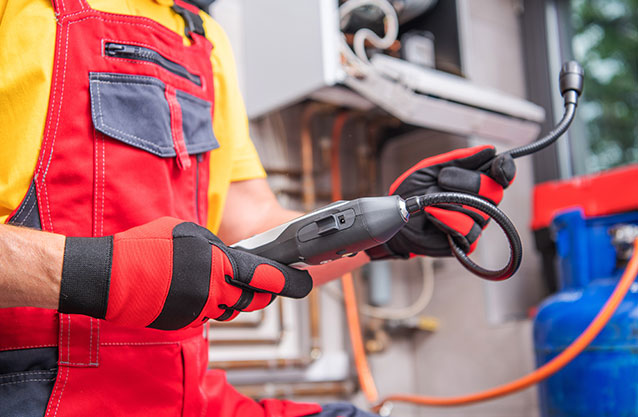
Leak detection in Melbourne is no longer just about a plumber listening at the wall. Today, licensed professionals use thermal imaging, acoustic sensors, and tracer gas equipment to locate hidden leaks without unnecessary destruction. Whether you suspect a slow underground leak under your Essendon driveway, a concealed pipe failure behind your Footscray walls, or a dangerous gas leak near your Werribee kitchen, early detection saves thousands in repair costs. This guide covers every aspect of leak detection for Melbourne homeowners in 2026 – from what drives the cost, to which technology works best, to when you should call a professional immediately.
Melbourne’s ageing housing stock, clay-heavy soils, and unpredictable seasonal rainfall create conditions that test even well-maintained plumbing. Furthermore, suburbs like Williamstown, Caroline Springs, and Hoppers Crossing face unique pressures from ground movement and expanding infrastructure. Consequently, understanding your options before a problem escalates is one of the smartest investments a Melbourne homeowner can make.
Verified Fact — Unnoticed household leaks can cost Australian homeowners up to $1,200 extra each year, wasting thousands of litres of water. In fact, a single unchecked dripping tap alone can waste upwards of 9,000 litres of water annually. Early leak detection remains both an environmental and financial priority for every Melbourne household.
Source: Yarra Valley Water / Smart Water Mark
Why Melbourne Homes Are Vulnerable to Hidden Leaks
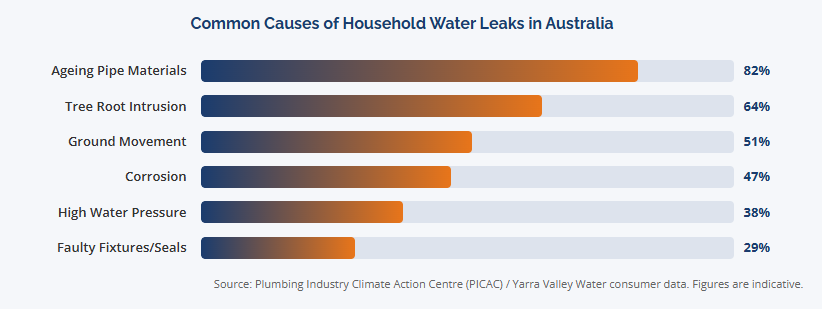
Many Melbourne properties were built between the 1950s and 1980s. During that era, galvanised steel and copper piping were standard materials. Both materials degrade over time. Galvanised pipes corrode from the inside outward. Copper pipes develop pinhole leaks in areas with reactive soil. Neither failure is immediately obvious.
Additionally, Melbourne’s clay soils shift considerably between dry summers and wet winters. This movement stresses underground pipes and drain connections. Suburbs such as Point Cook, Sunshine, and Altona North sit on highly reactive soil profiles. Therefore, pipe joints in these areas are at elevated risk of cracking or separating.
Tree root intrusion is another major cause of concealed pipe damage. Established gardens in Essendon, Williamstown, and Caroline Springs often feature large trees with roots that actively seek out moisture in sewer and stormwater lines. Root infiltration can go undetected for years. Meanwhile, the structural damage compounds steadily underground.
Common Signs of an Undetected Water Leak
- Unexplained spike in your water bill without increased usage
- Damp patches or soft ground in the garden or lawn
- Musty odour inside walls, under floors, or in roof cavities
- Reduced water pressure throughout the home
- Warm patches on tiled or concrete floors (slab leak indicator)
- Visible mould or mildew near ceilings, walls, or skirting boards
- Meter continuing to tick when all taps are off
- Discoloured or brown water from taps
Notably, a water meter test is the simplest first check. Turn off all appliances and taps. Then watch the meter dial for 15 minutes. Any movement confirms active water loss somewhere in the system. At that point, calling a licensed plumber for professional leak detection in Melbourne is the logical next step.
Modern Leak Detection Technology Explained
Professional water leak detection in Melbourne has advanced dramatically. Modern plumbers rely on a suite of specialist tools. Each tool suits specific leak scenarios. Understanding the differences helps you ask the right questions when selecting a provider.
Thermal Imaging Cameras
Detect temperature differences in walls, floors, and ceilings. Ideal for concealed pipe leaks and slab moisture mapping. Non-destructive and highly accurate.
Acoustic Leak Detection
Ground microphones and listening devices pinpoint underground leak sounds. Highly effective for buried water mains and sewer lines in Melbourne clay soils.
Tracer Gas Detection
A non-toxic gas mixture is introduced into the pipe. Sensors at surface level detect where gas escapes. Excellent for complex underground or slab leaks.
CCTV Drain Cameras
A flexible camera inspects pipes internally. Instantly identifies cracks, root intrusion, blockages, and joint failures. Used across blocked drain inspections Melbourne-wide.
Pressure Testing
Measures pressure drops across isolated pipe sections. Confirms the presence and approximate location of a leak before investigation.
Moisture Meters
Quantify moisture levels inside wall cavities without drilling. Used alongside thermal imaging for comprehensive internal leak mapping.
At MKS Plumbing, our technicians carry multiple detection tools on every callout. This multi-method approach avoids unnecessary excavation. It also saves Melbourne homeowners significant repair and restoration costs. Accordingly, a non-invasive assessment is always the preferred starting point.
Non-Invasive vs. Traditional Leak Detection
Traditional leak finding often meant breaking tiles, opening walls, or digging trenches. Modern non-invasive leak detection in Melbourne eliminates most of that disruption. However, some scenarios still require physical access. A licensed plumber will advise the most appropriate approach for your specific situation.
Non-Invasive Detection
- Thermal imaging and acoustic devices
- Minimal property disruption
- Faster investigation process
- Lower ancillary repair costs
- Suitable for most wall and floor leaks
- Recommended first approach
Traditional Investigation
- Physical access to pipe location
- May require tile or wall removal
- Higher restoration costs involved
- Used when non-invasive tools inconclusive
- Necessary for complex buried leaks
- Often combined with modern tooling
Underground Leak Detection in Melbourne
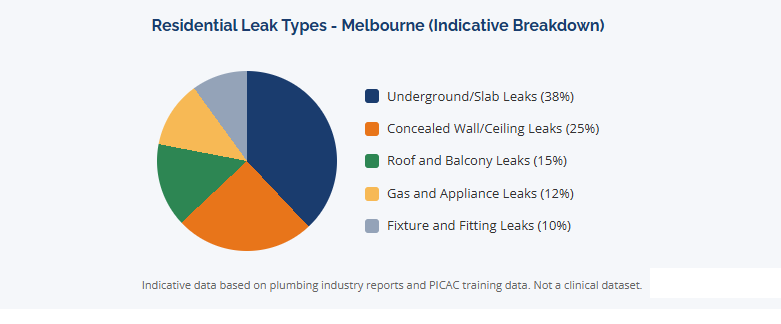
Underground leaks present the greatest challenge for Melbourne homeowners. They often cause extensive damage before producing any visible signs. Consequently, professional underground leak detection in Melbourne relies heavily on a combination of acoustic equipment and tracer gas methodology.
A licensed plumber pressurises the pipe, then uses surface-level sensors to map vibration patterns. However, the dense clay soils common across Sunshine, Hoppers Crossing, and Point Cook can severely muffle and absorb sound vibrations. Because of this dampening effect, local plumbers frequently switch to tracer gas detection methods to pinpoint hidden pipe bursts in clay areas, while acoustic tools excel in sandier coastal soils.
Verified Fact – Source: Water Services Association of Australia (WSAA)
Even though Australia maintains some of the lowest water utility leakage rates globally, network leaks still account for roughly 10% of supplied water across the country. Prompt residential detection and repair are vital to protecting household budgets and preserving community water infrastructure.
Slab Leaks – A Melbourne-Specific Concern
Concrete slab construction is widespread across Melbourne’s western and northern suburbs. Leaks beneath concrete slabs are particularly damaging. Warm water escaping from hot water pipes heats the slab. This causes structural cracking over time. Additionally, sustained moisture under a slab promotes mould growth in floor coverings and subfloor materials.
Thermal imaging cameras are the primary tool for slab leak detection in Melbourne. The temperature differential between a wet slab section and a dry one appears clearly on infrared imaging. Subsequently, a precise repair point is identified without breaking the entire floor.
MKS Plumbing’s technicians carry VBA Licence 48680 and have resolved slab leaks across Geelong, Werribee, and Melbourne CBD properties. Their six-year guarantee on completed work provides additional peace of mind for Melbourne homeowners facing slab repairs.
Burst Pipe Repair – Emergency Response Across Melbourne
A burst pipe demands immediate action. Water escaping under mains pressure can flood a home in minutes. It damages flooring, cabinetry, electrical systems, and structural elements simultaneously. Therefore, knowing your water meter shutoff location before an emergency occurs is essential.
Melbourne’s winter temperature drops, while not extreme, still cause thermal contraction in older pipes. Combined with elevated water pressure and pre-existing corrosion, this creates burst pipe risk. Notably, homes in Footscray and Essendon with galvanised steel pipes installed before 1980 carry the highest risk of sudden failure.
⚠ Emergency Action Required
If a pipe bursts, immediately turn off the water at the main meter. Avoid using electrical appliances in flooded areas. Then call a licensed emergency plumber. MKS Plumbing operates 24/7 across Melbourne for burst pipe emergencies. Call 03 9399 1011 immediately.
What Causes Burst Pipes in Melbourne?
- Ageing galvanised or copper pipes beyond service life
- Excessive water pressure above 500 kPa
- Tree root intrusion causing gradual pipe fracture
- Ground movement in reactive clay soils
- Corrosion from aggressive water chemistry
- Physical damage during renovation or excavation work
- Freezing temperatures in exposed outdoor pipes
For burst pipe detection and emergency repair across Melbourne suburbs, visit MKS Plumbing’s burst pipe service page. Same-day response is available across the entire metropolitan area.
Gas Leak Detection in Melbourne – Safety First
Gas leak detection in Melbourne is an entirely different discipline from water leak detection. Natural gas and LPG leaks carry life-threatening risks. Even a small undetected gas leak can accumulate to explosive concentrations in an enclosed space. Furthermore, carbon monoxide from incomplete combustion poses a separate but equally serious hazard.
⚠ Gas Leak Emergency Protocol
If you smell gas indoors: do not touch light switches, do not use your phone inside the building, evacuate immediately, then call your gas distributor and a licensed gasfitter. In Victoria, only a licensed plumber/gasfitter can legally perform gas leak repairs.
Signs of a Gas Leak in Your Home
- A sulphur or rotten egg smell near appliances or in rooms
- Hissing or whistling sounds near gas lines or appliances
- Dead or dying vegetation over an underground gas line path
- Unexplained increase in your gas bill
- Pilot lights that extinguish frequently without explanation
- Bubbling in puddles or wet ground near gas lines
- Dizziness, nausea, or headaches when indoors
MKS Plumbing holds full gas safety inspection credentials. Their team performs gas safety inspections and gas leak detection across Melbourne, including Geelong, Williamstown, and Caroline Springs. Gas detection equipment used includes electronic combustible gas sensors calibrated to detect even trace concentrations.
Victoria’s Energy Safe Victoria regulates gas work standards. All repairs must meet the Energy Safe Victoria requirements. Choosing a licensed gasfitter ensures compliance and safety accountability.
Roof Leaks, Shower Leaks, and Balcony Leak Reports
Water intrusion from above is among the most destructive leak categories for Melbourne properties. Roof leaks allow moisture into insulation, timber framing, and ceiling plasterboard. Left unaddressed, this creates severe mould problems and structural timber rot. Moreover, Melbourne’s spring storm season accelerates damage in compromised roof structures.
Shower leaks are similarly problematic. Waterproofing membranes in older Melbourne bathrooms degrade over time. Once a membrane fails, water seeps through grout and tile adhesive into the subfloor and wall framing. Properties in Altona, Point Cook, and Hoppers Crossing where bathrooms were tiled prior to 2000 are particularly susceptible.
MKS Plumbing provides professional roof reports, shower and balcony leak reports, and roof leak repairs across Melbourne. These formal written reports are accepted by insurance providers and body corporate managers for claims and compliance documentation.
When You Need a Formal Leak Report
- Insurance claim documentation for water damage
- Pre-purchase building inspection supplementation
- Body corporate dispute resolution in apartments
- Rental property landlord compliance requirements
- Building permit applications involving plumbing works
- Legal proceedings relating to water ingress damage
Plumbing Maintenance Melbourne – Preventing Leaks Before They Start
Reactive plumbing is always more expensive than preventive maintenance. A structured plumbing maintenance schedule catches developing issues before they escalate. For Melbourne homeowners, an annual plumbing inspection is a sound investment.
During a maintenance visit, a licensed plumber inspects all fixtures, checks water pressure, tests hot water system performance, inspects visible pipework for corrosion, and clears any early-stage drain blockages. Additionally, they assess roof gutters and downpipe connections ahead of Melbourne’s winter rainfall period.
Annual Professional Inspection
A licensed plumber checks all accessible pipe work, fixtures, and fittings. Early corrosion and joint failures are identified and addressed.
Water Pressure Check
Pressure above 500 kPa accelerates pipe wear. A pressure-limiting valve protects your entire plumbing system from high-pressure damage.
Hot Water System Service
Sediment buildup reduces efficiency and causes anode rod failure. Annual servicing extends system lifespan and prevents tank failure leaks.
Drain Camera Inspection
CCTV inspection of drain lines identifies root intrusion and buildup before blockages or pipe failures develop.
Gas Appliance Safety Check
All gas connections, flues, and appliances are inspected. This ensures compliance with Energy Safe Victoria standards.
Commercial property operators across Melbourne CBD, Geelong, and Footscray can also access MKS Plumbing’s commercial plumbing and grease trap maintenance services. Industrial facilities in Sunshine and Werribee benefit from dedicated industrial plumbing and fire service repair programs.
Hot Water Service Leaks – What Melbourne Homeowners Should Know
A leaking hot water system is more than an inconvenience. It represents active water wastage, potential safety risk, and the early stages of unit failure. Melbourne homeowners should inspect their hot water systems annually. Signs of a failing unit include water pooling beneath the tank, a pressure relief valve discharging regularly, or unusual popping sounds during heating.
MKS Plumbing services hot water systems across all major Melbourne suburbs. Visit the relevant local pages for service information in your area.
Blocked Drains and Sewer Leak Detection in Melbourne
A partially blocked drain can be the early sign of a larger sewer system failure. Tree roots entering cracked sewer pipes create blockages but also allow ground water to infiltrate the sewer. This overloads the system and can cause sewage backup. Consequently, recurring blocked drains should always prompt a CCTV drain inspection rather than repeated clearing alone.
MKS Plumbing provides formal drain reports for insurance claims, pre-purchase property assessments, and body corporate disputes. These reports document pipe condition, identify failure points, and recommend remediation options. They serve as legally useful documentation in property transactions.
Blocked drain services are available across Melbourne’s western suburbs and beyond.
Home Insurance and Leak Detection in Melbourne
Understanding your insurance position before a leak event is critical. Most Australian home insurance policies distinguish between sudden and accidental water damage versus gradual or maintenance-related damage. Sudden pipe bursts are typically covered. Slow leaks developing over months may be excluded.
A professional leak detection report from a licensed plumber strengthens insurance claims significantly. It documents the origin, cause, and extent of water damage. Many Melbourne insurers require a licensed plumber’s report before approving claims for hidden pipe damage. Therefore, obtaining a formal report promptly after discovery is advisable.
Verified Fact – Source: Insurance Council of Australia
Water damage is one of the leading causes of home insurance claims in Australia, accounting for a significant share of total residential claims by value each year. Early professional leak detection reduces both claim costs and insurer disputes. Source: Insurance Council of Australia.
When lodging an insurance claim for water damage in Melbourne, request a written report from your licensed plumber on their letterhead, including their VBA licence number. MKS Plumbing (Licence 48680) provides formal documentation suitable for all major Australian insurers.
Mould Prevention and Water Damage – The Hidden Cost of Ignored Leaks
Mould growth is a direct consequence of sustained moisture. Melbourne’s climate, with cool damp winters and humid summer evenings, creates ideal conditions for mould once water ingress occurs. Inside wall cavities, mould can establish within 24 to 48 hours of a leak beginning.
Beyond structural damage, mould poses health risks. The Australian Government’s Department of Health recognises mould exposure as a contributor to respiratory conditions, particularly in children and the elderly. Consequently, resolving leaks before mould establishes is always the better outcome.
Water damage restoration after a major hidden leak in a Melbourne home can cost tens of thousands of dollars. By contrast, professional leak detection typically costs a fraction of that amount. Therefore, annual plumbing inspections represent outstanding value for Melbourne property owners.
Water Efficiency and Melbourne’s Water Future
Melbourne’s water supply relies on catchment areas increasingly affected by climate variability. Melbourne Water and Yarra Valley Water continue to invest in network efficiency and consumer water-saving programs. Household leak detection aligns directly with these objectives.
Properties with water-efficient plumbing systems attract Watermark and WELS-rated fixtures. These systems waste less water and reduce utility bills. Furthermore, some Melbourne councils offer rebates for water-efficient fixture upgrades. Check with your local council for current rebate information.
Verified Fact – Source: Yarra Valley Water
A leaking toilet can waste up to 16,000 litres of water per year. A slow dripping tap wastes approximately 9,000 litres annually. These silent losses add significantly to household water bills. Source: Yarra Valley Water.
How to Choose a Leak Detection Plumber in Melbourne
Not every plumber offers specialist leak detection services. Choosing the wrong provider can result in unnecessary property damage, incorrect diagnosis, and wasted investigation costs. Here is what to verify before hiring.
Check VBA Licence
All Victorian plumbers must hold a current VBA licence. Verify any plumber’s credentials at the Victorian Building Authority website before work begins.
Confirm Detection Equipment
Ask specifically whether they carry thermal imaging, acoustic devices, and CCTV cameras. A plumber without specialist equipment cannot perform non-invasive detection.
Request Written Quotes
Always obtain a written quote before authorising work. Ensure it specifies detection method, investigation scope, and what happens if the leak requires excavation.
Confirm 24/7 Availability
Emergencies do not wait for business hours. Confirm your chosen plumber provides genuine after-hours response for burst pipes and gas leak emergencies.
MKS Plumbing satisfies all these criteria. With over 20 years of experience, VBA Licence 48680, modern detection technology, and genuine 24/7 availability, they are among Melbourne’s most trusted plumbing services providers for water leak detection and emergency response.
Pricing Disclaimer (as at June 2026): Leak detection costs in Melbourne vary significantly based on leak type, location, property access, detection method required, and individual provider pricing. The indicative ranges mentioned in this article (AUD $150 – $600+) reflect general market observations as at mid-2026 and are not guaranteed quotes. Always obtain a written quote from a licensed plumber before authorising any investigation or repair work. Prices may change. MKS Plumbing provides obligation-free written assessments – call 03 9399 1011 for current pricing.
Frequently Asked Questions – Leak Detection in Melbourne
As at mid-2026, leak detection in Melbourne generally starts from around $150 to $250 for a standard investigation. Complex cases involving underground detection, slab leak mapping, or tracer gas methods can range from $300 to $600 or more. Always request a written quote first. Prices vary between providers and are subject to change.
The best detection method depends on the leak location and type. Thermal imaging cameras work best for hidden wall and slab leaks. Acoustic listening devices are superior for underground water mains. Tracer gas suits complex concealed pipe systems. A licensed plumber will assess and select the appropriate tool for your situation.
Yes. Licensed plumbers use thermal imaging cameras, acoustic ground microphones, tracer gas detection kits, moisture meters, and CCTV pipe cameras. These tools locate leaks precisely without unnecessary demolition or excavation.
Non-invasive techniques including thermal imaging, acoustic sensors, and pressure testing locate leaks behind walls, under slabs, and underground. A licensed plumber first isolates the system section, then uses the appropriate detection method to pinpoint the exact leak location before any physical work begins.
Many Australian home insurance policies cover sudden and accidental water damage. Gradual or maintenance-related leaks may be excluded. Detection costs themselves are sometimes covered separately. Always review your policy documents and contact your insurer before commissioning detection work. A licensed plumber’s written report supports any claim.
Across Australia, leak detection pricing as at 2026 typically ranges from $150 to $600+ depending on method complexity, leak location, and regional labour rates. Melbourne pricing aligns with this general range. Contact MKS Plumbing on 03 9399 1011 for a current written quote.
Yes, provided they hold specialist detection equipment and training. Not every general plumber carries thermal imaging or acoustic detection gear. MKS Plumbing holds VBA Licence 48680 and uses modern non-invasive technology across all leak detection callouts in Melbourne.
Absolutely. Early professional detection typically costs far less than the structural repairs, mould remediation, and water damage restoration a missed leak causes. It also protects your insurance position and avoids inflated water bills. The investment pays for itself in most scenarios.
As at mid-2026, a standard Melbourne plumber investigation typically starts from $150 to $250 for a callout and visual assessment. Specialist detection using thermal imaging or acoustic tools adds to this cost. Complex investigations may reach $500 or more. Always obtain a written scope and quote before proceeding.
Yes. Licensed plumbers with acoustic ground microphones, tracer gas equipment, and pressure testing tools locate underground leaks precisely. MKS Plumbing performs underground leak detection across Melbourne suburbs including Werribee, Point Cook, and Hoppers Crossing without unnecessary excavation.
Common indicators include warm patches on floor surfaces, unexplained water bill increases, floor cracking, reduced water pressure, and damp or soft floor sections. A licensed plumber can confirm a slab leak using thermal imaging and pressure testing without breaking your floor unnecessarily.
Ageing galvanised or copper pipes, excessive water pressure, tree root intrusion, reactive soil movement, corrosion, and physical damage during renovation work are the leading causes. Properties in Footscray, Essendon, and other inner suburbs with pre-1980 plumbing carry higher risk.
Immediately. Do not use light switches or open flames. Evacuate the building, then call your gas distributor and a licensed gasfitter from a safe distance. Gas leaks are life-threatening emergencies. MKS Plumbing provides 24/7 gas leak response across Melbourne – call 03 9399 1011.
A standard residential leak detection inspection in Melbourne typically takes between 1 and 3 hours. Complex underground or slab leak investigations may take longer. Your plumber should give an estimated timeframe before starting work.
You can perform a basic water meter test yourself – turn off all taps and appliances, then watch the meter for 15 minutes. Any movement confirms an active leak. However, locating the source of a hidden leak requires specialist equipment. Always engage a licensed plumber for investigation and repair.
Conclusion – Why Prompt Leak Detection in Melbourne Pays Off
Hidden leaks are among the most financially damaging problems a Melbourne homeowner can face. They compound silently over months and years. By the time visible symptoms appear, structural damage is often already significant. Fortunately, modern leak detection in Melbourne using thermal imaging, acoustic sensors, and tracer gas eliminates the guesswork and most of the disruption.
Choosing a licensed, experienced plumber with proper detection equipment is essential. MKS Plumbing brings over 20 years of Melbourne plumbing experience, VBA Licence 48680, a six-year workmanship guarantee, and genuine 24/7 emergency availability. Their team services all major suburbs from Altona and Williamstown through to Essendon, Caroline Springs, Hoppers Crossing, and Geelong.
Do not wait for a small drip to become a major structural repair. Act early. Contact MKS Plumbing today for professional leak detection, burst pipe response, gas leak inspection, blocked drain clearing, or a comprehensive plumbing maintenance assessment. Your home – and your water bill – will thank you.