


Why Water Leak Detection Matters Across Melbourne
Reliable water leak detection in Melbourne homeowners can count on is no longer a luxury. It is an urgent necessity for protecting property, conserving water, and avoiding costly structural repairs. Melbourne’s variable weather, ageing pipe infrastructure, and a growing number of high-density dwellings mean hidden leaks are more common than most residents realise. Identifying them early makes a genuine financial difference.
Melbourne homes and businesses lose thousands of litres each year through leaking toilet cisterns, cracked underground pipes, and corroded joints. Many go completely unnoticed until water stains appear or a water bill spikes unexpectedly. By then, significant water damage and mould growth may have already taken hold inside walls or beneath floor slabs.
Acting promptly on any leak suspicion is always the smarter choice. Modern detection technology now allows licensed plumbers to pinpoint leaks precisely. They often do this without removing walls or excavating gardens unnecessarily. This saves homeowners time, money, and the stress of large-scale renovations.
According to Water NSW and industry data, a single dripping tap loses up to 20,000 litres of water per year. A running toilet can waste up to 260 litres every single day.
The Australian Government Water Efficiency Labelling and Standards (WELS) scheme confirms that household leaks collectively represent a significant percentage of total residential water consumption.
Sources: Water NSW; Australian Government WELS Scheme; Water Services Association of Australia (WSAA).
For homes across Melbourne’s western suburbs, from Hoppers Crossing to Footscray, and through established areas like Essendon and Williamstown, the local combination of clay soils, seasonal ground movement, and older pipe materials creates unique leakage risks. Understanding these risks helps homeowners make smarter decisions before calling a plumber.
Warning Signs of a Hidden Water Leak in Your Home
Most hidden leaks leave clues before they become disasters. Catching those clues early is the key. Recognising the warning signs saves Melbourne homeowners significant repair costs and protects their property’s structural integrity.
Common Signs You Should Never Ignore
- Unexplained water bill increases – A sudden spike without increased usage almost always signals a hidden leak somewhere in the system.
- Damp patches on walls or ceilings – Persistent moisture marks that do not dry out indicate active water behind surfaces.
- Mould or mildew growth – Mould appearing in areas without obvious moisture exposure often points to a concealed pipe leak nearby.
- Low water pressure – A noticeable drop in pressure throughout the property can indicate a fractured pipe or significant leak underground.
- Sounds of running water – Hearing water movement when all taps are off is a reliable early indicator of an active hidden leak.
- Hot spots on floors – Warm patches on concrete or timber floors sometimes indicate a slab leak from a hot water pipe beneath.
- Cracked or buckling flooring – Timber floors that warp, buckle, or develop gaps often do so due to sustained moisture from a pipe below.
- Garden patches that stay green – Lush green patches in an otherwise dry garden can indicate underground pipe leakage feeding the soil.
Quick Meter Check: Turn off all water-using appliances. Check your water meter. Wait exactly 15 minutes without using any water. A moving meter dial confirms an active leak somewhere in your system. Call a licensed plumber immediately.
Mould growth deserves special attention. Research from Safe Work Australia confirms that mould spores can begin colonising damp surfaces within 24 to 48 hours of moisture exposure. A single sustained leak inside a wall cavity can produce significant mould colonies within weeks. Early leak detection prevents this entirely.
How Modern Leak Detection Works: Non-Invasive Technology
Professional leak detection services have advanced dramatically over the past decade. Today’s licensed plumbers use technology that locates leaks precisely. This means far less disruption to your property during the investigation process.
MKS Plumbing uses modern diagnostic equipment developed specifically for residential and commercial leak detection in Melbourne. The aim is always to find the exact leak source first. Only then does any repair work begin. This avoids unnecessary damage to walls, floors, or landscaping.
Detection Methods Compared
Acoustic Listening Devices
- Detects leak sounds through pipes and surfaces
- Highly accurate on pressurised supply lines
- Non-invasive – no wall cutting required
- Effective on concrete slabs and underground
- Best for supply pipe leaks
Thermal Imaging Cameras
- Identifies temperature variations from water
- Ideal for slab leaks and wall cavities
- Completely non-destructive inspection
- Effective on hot and cold water pipes
- Produces documented photographic evidence
CCTV Drain Cameras
- Direct visual inspection inside pipes
- Locates cracks, root intrusions, blockages
- Supports drain and sewer condition reports
- Essential for stormwater and sewer lines
- Video footage provided for insurance use
Tracer Gas Detection
- Uses safe hydrogen/nitrogen gas mixture
- Finds extremely small micro-leaks
- Pinpoints leaks under driveways and slabs
- Accurate to within centimetres
- No excavation until exact spot confirmed
Pressure Testing
- Confirms whether a pipe system holds pressure
- Identifies leaking sections quickly
- Used alongside other detection methods
- Standard for new installation compliance
- Required for VBA compliance testing
Combining multiple methods produces the most reliable results. For example, acoustic detection may identify a zone of activity. Thermal imaging then narrows the precise location. Tracer gas pinpoints the exact repair spot. This layered approach means minimal disruption for homeowners across suburbs like Point Cook, Caroline Springs, and Werribee.
Verified Industry Fact
The National Fire and Plumbing Pty Ltd / Master Plumbers Australia confirms that non-invasive leak detection technology significantly reduces property damage costs compared to traditional exploratory excavation methods. Licensed plumbers in Victoria must hold a valid VBA plumbing licence to conduct regulated plumbing work, including leak detection and repair.
Source: Victorian Building Authority (VBA); Master Plumbers Australia.
Understanding how leak detection works helps Melbourne homeowners ask the right questions before any work begins. Always confirm the methods a plumber will use. A professional explanation of the process is a reliable indicator of genuine expertise.
The MKS Plumbing Leak Detection Process
When you contact MKS Plumbing about a suspected leak, our licensed team follows a systematic process. This ensures accurate results, transparent communication, and fully compliant repairs every time.
Initial Assessment and Visual Inspection
Our plumber reviews your water usage history, checks visible signs of moisture, and inspects all accessible pipe entry points before deploying equipment.
Meter and Pressure Testing
We isolate sections of your plumbing system and run pressure tests to confirm where loss is occurring and how severe the leak is.
Non-Invasive Technology Deployment
Acoustic devices, thermal cameras, or tracer gas equipment are deployed based on the property type and suspected leak location.
Precise Location Confirmed
We mark the exact location before any repair begins. No guesswork. No unnecessary cutting or digging across your property.
Repair with Compliant Materials
All repairs use high-quality materials that meet Australian Standards. Every completed repair is tested and fully documented.
Compliance Certificate and Report
Where required, we issue a compliant certificate of work under VBA licensing requirements. Full written documentation supports your insurance claim if needed.
Burst Pipe Repair in Melbourne: Act Fast to Minimise Damage
A burst pipe is one of the most damaging plumbing emergencies a Melbourne property owner can face. Water escapes at full supply pressure and floods affected areas rapidly. Structural damage to ceilings, walls, flooring, cabinetry, and electrical systems can occur within minutes of a major burst.
Melbourne’s cold winter months put particular stress on pipe systems. Overnight temperature drops cause pipes to contract. This stress accelerates existing weaknesses in older copper, galvanised steel, or polybutylene piping. Homes in areas like Essendon, Altona, and Williamstown with older pipe infrastructure are particularly susceptible during July and August.
Immediate Steps After a Burst Pipe
- Turn off the main water supply at the meter immediately.
- Switch off any electrical circuits near the affected area at the switchboard.
- Move valuable items and furniture away from the flood zone.
- Call MKS Plumbing on 03 9399 1011 for immediate 24/7 emergency response.
- Do not attempt to repair a burst pipe without a licensed plumber.
- Document all visible damage with photos for your insurance provider.
MKS Plumbing provides 24/7 emergency burst pipe repair across Melbourne. Our licensed team responds quickly to minimise secondary damage and restore your water supply safely. Repairs are carried out under Licence Number 48680 and backed by a six-year workmanship guarantee.
Verified Quick Fact
According to the Victorian Building Authority (VBA), all plumbing work in Victoria, including burst pipe repairs, must be performed by a licensed plumber. DIY repairs to pressurised water supply systems are not permitted under Victorian plumbing regulations and may void home insurance policies.
Source: Victorian Building Authority (VBA); Plumbing Regulations Victoria 2018.
Burst pipe repair costs in Melbourne vary depending on access difficulty, pipe material, and location. Underground or slab-penetrating repairs naturally cost more than surface pipe replacements. Always request a written quote before work begins. MKS Plumbing provides transparent, upfront pricing on all jobs.
Pricing Disclaimer: Any cost estimates mentioned in this guide reflect general market ranges as of mid-2026 only. Actual pricing varies based on job complexity, access requirements, materials, and current market conditions. Always request a written quote from your licensed plumber before authorising any work.
Gas Leak Detection Melbourne: Safety Comes First
A gas leak is one of the most serious plumbing emergencies a Melbourne household can face. Natural gas and LPG are highly flammable. Even a small undetected leak creates a genuine explosion and asphyxiation risk. Knowing how to respond correctly and who to call is essential knowledge for every Melbourne homeowner.
Signs of a Possible Gas Leak at Home
- A smell of sulphur or rotten eggs near appliances or gas lines
- A hissing or whistling sound near gas pipes, meters, or appliances
- Dead vegetation patches in an otherwise healthy garden
- Pilot lights that keep extinguishing without explanation
- Physical symptoms such as headaches, nausea, or dizziness indoors
- Unusually high gas bills without increased usage
Verified Safety Information
If you suspect a gas leak, the Energy Safe Victoria (ESV) advises: do not operate any electrical switches, do not use a phone inside the building, open windows and doors to ventilate, evacuate everyone from the property, and call Gas Emergency on 132 771 from outside. Contact a licensed gas plumber after the emergency service has cleared the scene.
Source: Energy Safe Victoria (ESV). Always follow ESV emergency guidelines.
MKS Plumbing provides gas safety inspections and licensed gas leak detection across Melbourne. Our qualified gas-licensed plumbers use calibrated gas detection equipment to locate leaks accurately and safely. All gas repair work complies with Australian Standard AS/NZS 5601.1 for gas installations.
Additionally, regular gas safety inspections are strongly recommended for Melbourne rental properties and older homes. Ageing gas appliances and deteriorating flexible hoses are leading contributors to gas leak incidents across Victoria. A professional inspection every two years is considered best practice by Energy Safe Victoria.
Blocked Drains and Drain Reports Across Melbourne
Blocked drains are among the most frequently reported plumbing problems across Melbourne’s residential and commercial properties. They develop gradually as grease, hair, tree roots, and debris accumulate inside drain pipes over time. Left uncleared, they cause sewage backflow, flooding, and structural damage to drain infrastructure.
MKS Plumbing provides blocked drain clearing services and professional drain condition reports across Melbourne. CCTV drain camera inspection is used to assess the internal condition of sewer and stormwater drains. These reports are invaluable for pre-purchase building inspections, insurance documentation, and identifying root intrusion before it causes collapse.
Common Causes of Blocked Drains in Melbourne Suburbs
- Tree root intrusion – Especially common in older suburbs like Footscray, Essendon, and Sunshine where large established trees are prevalent.
- Grease accumulation – A major issue in commercial kitchens and food service businesses requiring regular grease trap servicing.
- Foreign object blockages – Wet wipes, sanitary products, and construction debris are common culprits in Melbourne’s older sewer networks.
- Collapsed or cracked drains – Ground movement in Melbourne’s clay soil suburbs causes drain pipe displacement and collapse over time.
- Stormwater overload – Inadequate stormwater infrastructure in older developments causes surcharging during heavy rainfall events.
Responding to a blocked drain promptly is important. Delaying drain clearing allows backflow to contaminate household plumbing and creates unpleasant sewage conditions. MKS Plumbing’s 24/7 availability means Melbourne residents never have to wait until the next business day to resolve an urgent drainage problem.
Hot Water System Leaks and Hot Water Service Across Melbourne
A leaking hot water system is both a plumbing emergency and a significant energy waste issue. Hot water service failures account for a notable proportion of household water damage claims in Victoria. Identifying the source of a hot water leak quickly prevents further damage to flooring, cabinetry, and adjacent structures.
MKS Plumbing provides comprehensive hot water service across Melbourne, including installation, repair, and replacement of electric, gas, solar, and heat pump hot water systems. Our licensed plumbers carry parts for most major brands and can often resolve hot water problems on the same day as your call.
Signs Your Hot Water System May Be Leaking
- Puddles or damp patches around the base of the hot water unit
- Rust-coloured water from hot taps indicating internal tank corrosion
- Popping or rumbling sounds during heating cycles indicating sediment buildup
- Inconsistent water temperatures from hot outlets
- Visible corrosion on the pressure relief valve or connections
Hot water systems have a typical service life of 8 to 12 years for storage tank systems and up to 20 years for quality continuous flow units. Properties across Melbourne suburbs including Hoppers Crossing, Werribee, Point Cook, and Caroline Springs that were built during the 1990s and early 2000s building boom are now approaching the end of their original system lifespan.
Roof Leaks, Shower Leaks, and Balcony Waterproofing
Roof leaks are a significant source of hidden water damage in Melbourne. Heavy winter rainfall, blocked gutters, and deteriorating roof flashing allow water to penetrate ceilings and wall cavities. Without prompt identification and repair, roof leak moisture causes structural timber decay, plasterboard failure, and extensive mould growth.
MKS Plumbing provides professional roof leak detection and repair services, as well as documented roof condition reports. These reports are essential for property sales, insurance claims, and strata management documentation.
Shower and Balcony Leak Reports
Failed waterproofing in showers and balconies is an extremely common source of concealed water damage in Melbourne apartments and townhouses. Water penetrates failed grout lines, cracked tiles, and deteriorated membrane systems. It then tracks into floor slabs and adjoining rooms before becoming visible.
MKS Plumbing’s shower and balcony leak reports provide accurate written documentation of waterproofing condition. These reports are frequently required for strata disputes, insurance assessments, and body corporate compliance in Melbourne’s growing apartment market.
Verified Building Regulation Fact
The Australian Building Codes Board (ABCB) National Construction Code requires all wet areas, including showers, bathrooms, and balconies, to be waterproofed to AS 3740 standards. Failed waterproofing that is not remediated can lead to significant structural damage and is a serious compliance matter for owners and strata corporations.
Source: Australian Building Codes Board (ABCB); AS 3740 Waterproofing of Domestic Wet Areas.
Plumbing Maintenance and Pipe Lifespan in Melbourne Homes
Proactive plumbing maintenance is the single most effective strategy for avoiding emergency plumbing costs. Melbourne homeowners who invest in regular inspections identify small issues before they escalate. This approach consistently delivers lower lifetime plumbing costs than reactive repairs alone.
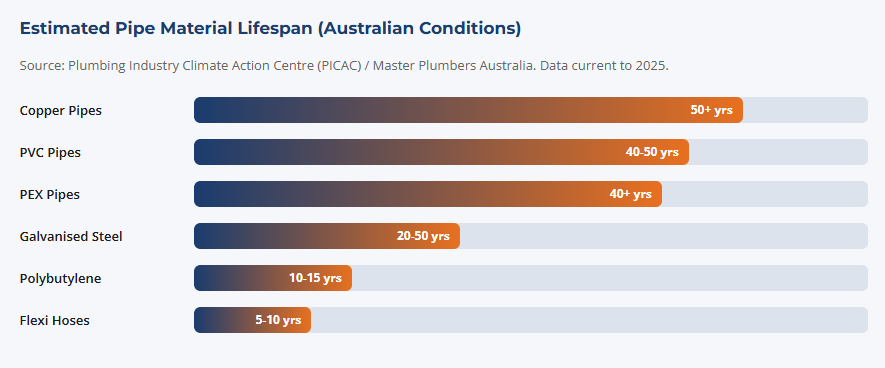
Flexi hoses deserve particular attention from Melbourne homeowners. These braided stainless-steel hoses connect tapware, toilets, and under-sink plumbing throughout most modern Melbourne homes. They are also one of the leading causes of major internal flooding events in Australia. The Insurance Council of Australia and major insurers have highlighted flexi hose failures as a significant driver of home water damage claims.
MKS Plumbing’s maintenance plumbing services include a thorough inspection of all flexi hoses, valves, tap washers, hot water connections, and visible pipe runs. Proactive replacement of ageing hoses is one of the most cost-effective preventive investments a Melbourne homeowner can make.
Recommended Melbourne Home Plumbing Maintenance Schedule
- Every 6 months: Check all visible flexi hoses for bulging, rust, or corrosion. Inspect toilet cisterns for continuous running. Test tap washers and reseat valves.
- Every 12 months: Hot water system inspection including pressure relief valve testing, anode rod inspection on storage systems, and thermostat check.
- Every 2 years: Full plumbing maintenance inspection including gas safety check, drain health check, roof and gutter inspection, and water pressure test.
- Every 5 years: CCTV drain inspection for homes over 20 years old, particularly in clay soil suburbs like Footscray, Sunshine, and Werribee.
MKS Plumbing also supports Melbourne’s commercial plumbing and industrial plumbing clients with scheduled maintenance programs. These programs minimise unplanned downtime, maintain regulatory compliance, and extend the operational life of commercial plumbing assets.
Understanding Leak Detection Costs in Melbourne
Cost transparency matters to Melbourne homeowners. Understanding what drives pricing helps you evaluate quotes confidently and avoid surprises. Several factors influence the total cost of professional leak detection and repair in Melbourne.
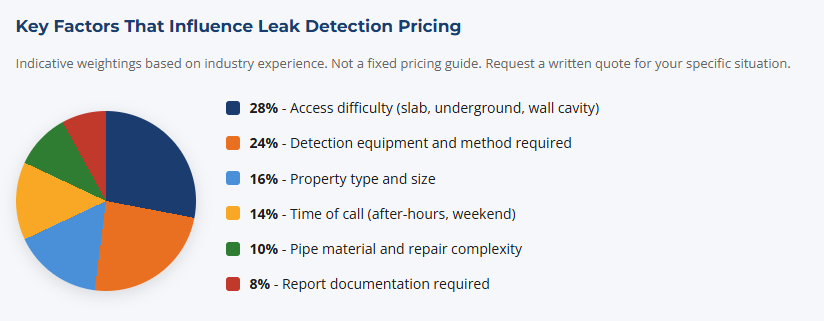
Important Pricing Disclaimer (June 2026): The following indicative price ranges reflect general Melbourne market conditions as of mid-2026. Actual pricing varies significantly based on job scope, materials, access, and individual plumber pricing. These figures are provided as a general guide only. Always obtain a written itemised quote before authorising any plumbing work. MKS Plumbing provides free, no-obligation quotes on all jobs.
Indicative Melbourne Plumbing Cost Ranges (Mid-2026)
- Basic leak detection (acoustic/visual): Approximately $150 to $350
- Advanced leak detection (thermal/tracer gas): Approximately $300 to $700
- CCTV drain camera inspection: Approximately $250 to $500
- Burst pipe repair (accessible pipe): Approximately $300 to $800
- Burst pipe repair (under slab): Approximately $1,000 to $3,000+
- Hot water system replacement: Approximately $900 to $3,500+ depending on system type
- Blocked drain clearing (high pressure jet): Approximately $200 to $500
- After-hours emergency callout: Standard rates plus emergency surcharge – request exact quote
These figures are indicative only. Always confirm pricing in writing before work begins. MKS Plumbing provides written quotes on all services and does not commence work without your approval.
Melbourne Suburbs We Serve
MKS Plumbing delivers water leak detection, burst pipe repair, gas leak detection, blocked drain clearing, hot water service, and full plumbing maintenance across Melbourne’s western and bayside suburbs. Our local knowledge of Melbourne’s ageing pipe infrastructure, clay soil conditions, and suburb-specific challenges makes us the trusted choice throughout the region.
Licensed Plumbing Services Available In
Altona
Caroline Springs
Essendon
Footscray
Geelong
Hoppers Crossing
Melbourne CBD
Point Cook
Sunshine
Werribee
Williamstown
Blocked Drain Services Near You
Altona
Caroline Springs
Essendon
Footscray
Geelong
Hoppers Crossing
Point Cook
Sunshine
Werribee
Williamstown
Hot Water Service Near You
Altona
Caroline Springs
Essendon
Footscray
Geelong
Hoppers Crossing
Point Cook
Sunshine
Werribee
Williamstown
Why Melbourne Homeowners Choose MKS Plumbing
Choosing the right plumber for water leak detection in Melbourne means more than finding someone with a licence. It means finding a team with genuine experience, modern technology, transparent communication, and a documented track record of quality work. MKS Plumbing delivers all of these things and has done so for over 20 years across Melbourne’s residential, commercial, and industrial sectors.
20+ Years Experience– Two decades of Melbourne plumbing expertise across all property types and service categories.
Modern Technology– Acoustic detection, thermal imaging, tracer gas, and CCTV cameras for accurate non-invasive results.
Guaranteed Work– Six-year workmanship guarantee on completed repairs. All work meets VBA compliance requirements.
Fully Licensed– VBA Plumbing Licence Number 48680. All plumbing and gas work fully compliant with Victorian regulations.
24/7 Availability– Emergency plumbing response available every hour of every day across Melbourne and surrounds.
Quality Workmanship– High-quality materials and installation standards that exceed minimum compliance requirements consistently.
MKS Plumbing’s six-year workmanship guarantee provides Melbourne homeowners with genuine peace of mind. Unlike single-year warranties common across the industry, this extended guarantee reflects our confidence in the materials we use and the quality of every repair we complete.
MKS Plumbing arrived within the hour after we discovered water leaking through our ceiling. They found the exact source of the leak without opening a single wall unnecessarily. The repair was done the same day and we have not had any issues since. Highly recommend their professionalism and care.
Verified Google Review – MKS Plumbing Customer, Melbourne
Frequently Asked Questions: Water Leak Detection in Melbourne
Turn off all taps and water-using appliances. Check your water meter. A moving dial or digital reading confirms an active leak. Call a licensed plumber to locate the exact source using professional detection equipment.
Yes. Professional acoustic detectors, thermal imaging cameras, and tracer gas systems locate hidden leaks with high accuracy. They do this without unnecessary excavation or wall removal. Licensed plumbers use these tools daily with reliable results.
Professional leak detection in Melbourne typically ranges from $150 to $500 as of mid-2026, depending on complexity and detection method. Advanced slab or underground leak detection may cost more. Always request a written quote before authorising work.
Yes. Licensed plumbers use acoustic listening devices, thermal imaging cameras, tracer gas equipment, CCTV drain cameras, and pressure testing systems to locate leaks accurately and non-invasively.
A licensed plumber uses acoustic detection to hear escaping water through surfaces, thermal imaging to identify temperature anomalies from moisture, tracer gas to find micro-leaks under slabs, and CCTV cameras to inspect drain interiors. Multiple methods are often combined for precision.
Leaking toilet cisterns are the most common household water leak in Australia. Running cisterns can waste up to 260 litres daily. Dripping taps, failed flexi hoses, and corroded pipe joints are also very common sources of residential water loss.
Yes. Non-invasive detection methods including acoustic listening, thermal imaging, and tracer gas injection locate most leaks without excavation. Digging only occurs at the confirmed repair location, minimising disruption to gardens and driveways.
Expect to pay between $150 and $500 for professional leak detection in Melbourne as of mid-2026. Emergency after-hours callouts may carry additional surcharges. Always obtain a written quote first. MKS Plumbing provides free quotes on all jobs.
Yes. Even a single leak event can trigger mould growth within 24 to 48 hours if affected surfaces are not dried quickly and thoroughly. Prompt repair and professional drying of affected cavities are essential to prevent mould establishment.
Hidden leaks inside wall cavities or under concrete slabs can remain undetected for months or even years. They cause progressive structural damage, mould colonisation, and significant water loss before becoming visible. Annual plumbing inspections help catch these early.
Basic meter monitoring and visual inspection of visible pipes are useful first steps. However, locating a hidden leak inside walls, under slabs, or underground requires licensed plumbers with professional diagnostic equipment. DIY attempts can result in unnecessary property damage.
Some home insurance policies cover sudden and accidental water damage but generally exclude gradual leaks. Always review your specific policy documents and contact your insurer before making a claim. Professional detection reports from a licensed plumber support the claims process.
A full plumbing health check every two years is recommended for most Melbourne homes. Older properties built before 1990 benefit from annual inspections due to ageing pipe materials. Homes with known drainage issues or in clay soil suburbs should inspect drains every five years with CCTV equipment.
A slab leak occurs when a water pipe beneath the concrete floor slab develops a crack or failure. Water escapes under pressure into the soil below and can gradually undermine the slab’s structural integrity. Slab leaks require immediate professional attention. Learn more about plumbing systems via Wikipedia.
Final Thoughts: Protecting Your Melbourne Home From Water Leaks
Effective water leak detection in Melbourne homeowners trust starts with choosing a licensed, experienced plumbing team equipped with modern detection technology. Hidden leaks cause far more damage the longer they remain undetected. Acting at the first warning sign consistently delivers the best outcomes for your property and your budget.
MKS Plumbing has served Melbourne homeowners, businesses, and strata properties for over 20 years. Our team holds VBA Licence Number 48680, backs every repair with a six-year workmanship guarantee, and operates 24 hours a day across Melbourne’s western suburbs, bayside areas, and beyond.
From Altona to Essendon, Footscray to Hoppers Crossing, Point Cook to Williamstown, our local knowledge of Melbourne’s pipe infrastructure helps us diagnose problems faster and deliver better outcomes on every job.
Do not wait for a small leak to become a major repair bill. Early detection always costs less than emergency remediation. Call MKS Plumbing now on 03 9399 1011 or email jobs@mksplumbing.com.au for a free, no-obligation quote.
For further reading on water efficiency and plumbing regulations in Victoria, visit the Victorian Building Authority, Energy Safe Victoria, and the Australian Government WELS Scheme. Additional background on plumbing systems is available through Wikipedia’s Plumbing article.