



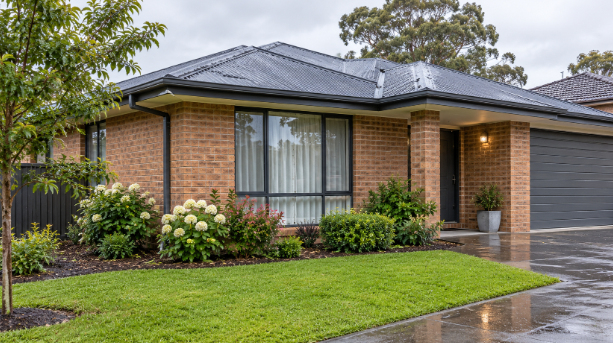
Before recommending roof leak repairs, a suitably authorised roof plumber should investigate where rainwater is entering, examine roof coverings, flashings, gutters and drainage, and explain the evidence behind the diagnosis. A useful assessment separates confirmed defects from possible causes and sets out the proposed repair scope before work begins.
A leaking ceiling often sends Melbourne homeowners straight into repair mode. However, approving a quick patch without establishing where the water entered can leave the underlying problem untouched.
If you are currently searching for a roof plumber in Melbourne, you need more than a promise to stop the drip. This guide explains seven checks a professional should make, how the findings should be documented, and what to ask before approving repairs.
What Should a Roof Plumber Check First?
A proper inspection starts with evidence, not assumptions. Rainwater can enter at one location, move across roof components or framing, and appear as a stain some distance away; therefore, a visible patch of dampness is a clue rather than a diagnosis.
The seven checks below cover common metal-roof and roof-drainage concerns. The order and methods depend on the property, access and safety conditions, and not every inspection will require every test.
1. Map the leak history and visible water damage
What to check: The plumber should ask when water appears, which rooms are affected, whether the stain grows during heavy rain, and whether wind direction makes a difference. They should also review past roof work and any earlier repairs.
Why it matters in Melbourne: A roof can remain dry in light rain yet leak when strong winds drive water towards a vulnerable flashing or junction. Water may then travel through the roof space before becoming visible indoors.
If the finding is unclear: Ask for the suspected entry areas to be documented and for additional investigation before accepting a repair based only on a ceiling stain. Keep dated photographs of the symptoms taken safely from inside the property.
2. Inspect roof coverings, pitch and fixings
What to check: On applicable metal roofs, the inspector should assess roofing sheets, laps, corrosion, loose or deteriorated fixings, and any visible damage. Roof pitch, drainage direction and the system’s installation requirements should also be considered.
Why it matters in Melbourne: Rainwater needs to move across the roof as intended, including during heavier showers. A damaged fastening or inappropriate junction detail may allow water beneath the covering without obvious damage directly above the leak.
If the check identifies a problem: Ask whether the issue is isolated or points to wider deterioration. A targeted replacement may be appropriate in one situation, while a broader roofing assessment may be needed in another. Different roof-covering materials may require a different qualified trade.
3. Examine flashings, skylights and roof penetrations
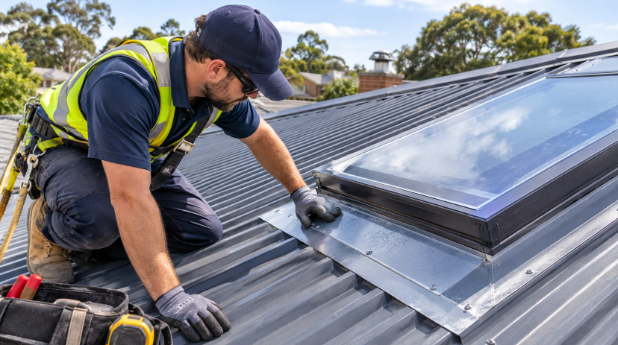
What to check: Roof-to-wall junctions, vents, skylights and other penetrations should be assessed for inadequate flashing, loose edges, gaps, displacement or deteriorated materials. The surrounding roof surface matters as much as the immediate joint.
Why it matters in Melbourne: Wind-driven rain can reach vulnerable junctions from directions that ordinary rainfall does not. A small flashing defect may therefore cause intermittent water ingress that is difficult to reproduce on a dry day.
If the check fails: Request a repair description showing the actual defective detail and the components to be repaired or replaced. A recommendation to apply sealant alone should be supported by a clear explanation of why it will solve the source of the leak.
4. Assess gutters, valleys, box gutters and overflows
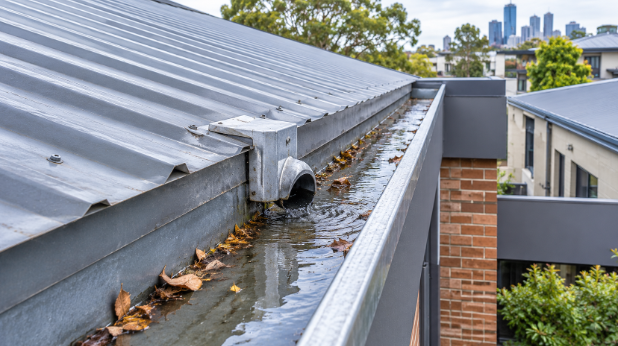
What to check: The plumber should inspect relevant gutters and valleys for leaves, debris, corrosion, poor fall, damaged joints, blocked outlets and signs of overflow. Box gutters and internal drainage arrangements warrant careful attention because escaping water can reach occupied areas.
Why it matters in Melbourne: Intense rainfall can expose a blocked or poorly functioning drainage path that appears normal in dry weather. If normal outlets are restricted, water may pond or overflow towards building elements that are not designed to contain it.
If the check fails: Ask whether cleaning, component repair or a more comprehensive drainage assessment is required. The report should identify the affected outlet or overflow path; simply clearing debris may not resolve an underlying design or deterioration issue.
5. Follow downpipes and connected stormwater drainage
What to check: The water path should be followed beyond the gutter, including visible downpipes, connections and relevant stormwater outlets. The inspection should look for disconnections, obstructions, leaks and evidence of water backing up.
Why it matters in Melbourne: A roof covering may be sound while a drainage issue allows rainwater to overflow or discharge in the wrong place. This can produce symptoms that appear to be a roof-covering problem.
If the check fails: Request a clear distinction between roofing stormwater repairs and any below-ground drainage work, since the relevant plumbing classes and investigative methods can differ. Additional stormwater repairs may be appropriate when a connected drainage fault is confirmed.
6. Establish the source with suitable leak-detection methods
What to check: If visual findings do not establish the likely entry point, the professional may use moisture readings, inspection photographs, controlled water testing or other appropriate techniques. Tests should be selected according to the symptoms and carried out safely.
Why it matters in Melbourne: A roof leak, condensation and a concealed internal pipe leak can all produce damp plaster or stained ceilings. Professional leak detection helps distinguish between possibilities, but tools such as thermal cameras do not prove a roof defect on their own.
If results remain uncertain: Ask to state what has been confirmed, what is only suspected and what additional testing could change the conclusion. Also, water leak detection Melbourne may be relevant if the evidence points towards concealed plumbing rather than rainwater ingress.
7. Review the proposed repair, safe access and documentation
What to check: Before permanent work is approved, the plumber should explain the identified defect, proposed materials and methods, safe-access requirements, limitations and any additional investigation needed. For shared or strata property, authority to approve the work may also need to be confirmed.
Why it matters in Melbourne: Steep or elevated roofs may require specialised access and safety controls. Plumbing work also needs to be undertaken by practitioners appropriately authorised for the relevant Victorian plumbing class.
If the scope is vague: Ask for a written explanation of the repairs, exclusions, costs, variations and any applicable compliance documentation. A detailed roof inspection report can make these findings easier to compare and communicate.

The Seven-Check Roof Leak Inspection Checklist
Use this checklist to assess whether the proposed investigation is thorough. It is a guide to the questions worth asking, not an instruction to perform roof work yourself.
- Leak pattern: When, where and under what weather conditions does water appear?
- Roof covering: Were relevant sheets, joints, roof pitch and fixings assessed?
- Junctions: Were flashings, skylights, roof-to-wall details and penetrations examined?
- Roof drainage: Were gutters, valleys, box gutters, outlets and overflows considered?
- Stormwater route: Were downpipes and connected drainage assessed where relevant?
- Diagnosis: Is the source confirmed, suspected or still unresolved?
- Repair approval: Does the written scope explain the work, costs, exclusions and documentation?
Which Symptoms Point to Which Roof Problems?
The following comparison can help describe your problem when requesting an inspection. It cannot determine the cause without examining the property.
| What you notice | Possible explanation | What to ask the professional |
| Stain grows after wind-driven rain | Flashing or roof-junction fault | Has the likely wind-facing junction been assessed? |
| Water appears around a skylight | Penetration or surrounding flashing issue | Is the defect at the skylight or further upslope? |
| Leak occurs only in heavy downpours | Overflowing gutter, outlet or drainage restriction | Has roof drainage and overflow been checked? |
| Dampness persists in dry weather | Concealed pipe leak, condensation or retained moisture | Is the source definitely rainwater? |
| Same area leaks after previous repairs | Unresolved fault or separate water-entry path | What was originally repaired, and what evidence has changed? |
| Water reaches a light fitting | Potential electrical hazard | Has the area been made electrically safe before repairs? |
| SAFETY COMES FIRSTIf water is reaching light fittings, switches or other electrical equipment, keep clear of the affected area and seek prompt advice from a licensed electrician. Do not climb onto a wet roof or enter an unsafe ceiling space to investigate. |
How Does Leak Detection Identify the Source of Roof Leaks?
Leak detection is a process of testing possible explanations against observations. A roof plumber may begin by looking for defects and following the plausible path of rainwater, then decide whether further testing is needed to reach a defensible conclusion.
For a recurring leak, useful evidence might include photographs from the roof, the location of interior moisture, the weather conditions in which the problem appears and notes about previous repairs. However, a single image of dampness or a thermal pattern should not be treated as conclusive proof of its source.
Checking Flashings, Gutters and Roof Drainage
Flashings, roof coverings and drainage components operate as a connected system. If an outlet is restricted, water may accumulate near a junction; similarly, an apparently damaged flashing may not be responsible for the visible internal stain. The investigation should connect the observed defect to a plausible path of water entry.
When Additional Leak Detection May Be Needed
Where the evidence remains inconclusive, additional testing may be warranted. In some circumstances, a specialist can investigate whether moisture originates from concealed pipework rather than the roof; this is where broader leak detection Melbourne services may assist.
Ask what the proposed test can and cannot establish, whether it is safe for the roof assembly and what happens if it fails to reproduce the leak. A written statement of uncertainty is more useful than unjustified certainty.
What Should Be Included in a Roof Leak Repair Quote?
A roof leak repair quote should make the connection between the findings and the proposed work easy to understand. Without that explanation, two quotes may be impossible to compare fairly, even if the headline prices look similar.
| Quote item | What it should tell you |
| Inspection finding | The location and nature of the confirmed or suspected defect. |
| Repair scope | Which components will be repaired or replaced, and why. |
| Materials and access | Materials proposed, access arrangements and relevant safety considerations. |
| Price and GST | Itemised costs or clear pricing basis, including GST where applicable. |
| Exclusions and variations | What is not included and how unforeseen work will be approved. |
| Testing and completion | Any planned testing, photos, warranties and applicable documents. |
For example, “repair roof leak” is less informative than a scope identifying the defective flashing, the adjacent materials to be assessed and the method proposed to restore water-tightness. Exact work methods depend on what the inspection establishes.
If the repair is urgent, ask whether temporary measures and permanent repairs are being quoted separately. That distinction can prevent confusion about what has actually been fixed.
Which Roof Leak Repairs Address the Underlying Fault?
A successful repair targets the fault supported by the inspection evidence. If a single flashing is damaged and nearby materials are sound, a localised repair may be reasonable; if multiple roof or drainage components are deteriorating, a more extensive option may be appropriate.
Before approving roof leak repairs, ask whether the work addresses the likely cause of entry, how surrounding components will be checked and whether further deterioration could affect the result. The aim is not to select the largest scope, but to choose one that is proportionate to the evidence.
For leaking roof repairs after unsuccessful previous work, review the original quote and photographs alongside the latest findings. A new leak does not automatically prove that an earlier repair was defective, but it does justify a clear explanation of what has changed.
If you are weighing a localised repair against more extensive work, see the guide to leaking roof repair decisions. Once the issue is confirmed, appropriate roof leak repair services can be matched to the diagnosed problem.
How Can Plumbing Maintenance Help Prevent Recurring Problems?
Preventive plumbing maintenance cannot guarantee a leak-free roof, particularly during severe weather. However, scheduled inspections can reveal blocked drainage, deteriorating flashings, damaged joints and early warning signs that might otherwise go unnoticed.
After storms, note changes visible from ground level and retain photographs and previous maintenance records. For strata or commercial properties, those records can also assist with budgeting and approvals over time.
A suitable plumbing maintenance service can help assess roof-related defects alongside wider plumbing and drainage issues where appropriate.
Questions to Ask Before Approving Repairs
The most useful question is not simply “How quickly can you fix it?” It is “What evidence shows that this work is likely to resolve the cause?” Before you approve the quote, ask:
- Where is the suspected or confirmed entry point, and what observations support it?
- Were nearby roof coverings, flashings and drainage components checked?
- What part of the diagnosis remains uncertain, and what further testing would help?
- Does the price include safe access, materials, GST and the agreed completion work?
- What happens if concealed damage or a different fault is found during the repair?
- What photographs, reports and statutory compliance documents will be provided where required?
In Victoria, roofing stormwater work is a regulated plumbing class. The Building and Plumbing Commission explains the relevant class of work, and homeowners can check practitioners through the Commission’s guidance on engaging a plumber.
A registered practitioner is not necessarily the same as a licensed plumber. Only licensed plumbers can issue plumbing compliance certificates, and a certificate is generally required when the total value of relevant plumbing work exceeds $750 including labour, materials and GST, as well as in certain other prescribed circumstances.
Frequently Asked Questions
They should investigate when and where the leak occurs, inspect relevant roof coverings, fixings, flashings, penetrations, gutters and downpipes, and record how those findings relate to the water entering the building. A repair should be based on the diagnosed cause, not only the visible ceiling stain.
They combine leak history, visual inspection, moisture observations and appropriate testing where necessary. Further leak detection may help when the source is concealed, but no single tool proves the cause of every roof leak.
Heavy rain or wind-driven rain can expose vulnerable junctions, blocked gutters or a drainage arrangement that cannot discharge water as intended. The pattern is a useful clue, although the actual cause still requires inspection.
Yes. A blocked or overflowing gutter, particularly a box gutter, can direct water towards building elements that are not designed to hold it. The outlet, overflow route and connected drainage should be assessed before deciding on repairs.
No. Water can move along roof components, framing and other surfaces before it becomes visible inside. That is why inspecting only the area directly above a stain may miss the true entry point.
It should identify the observed problem, proposed repair, materials, access needs, price and GST treatment, exclusions, variation process and any completion testing or documentation. Also, ask for unresolved diagnostic uncertainty to be stated rather than hidden.
Roofing stormwater work must be carried out by people appropriately registered or licensed for that class, with the relevant supervision requirements. Only licensed plumbers can issue a plumbing compliance certificate where one is required.
Keep clear of the wet fitting and any affected switches or electrical equipment. Seek urgent advice from a licensed electrician, or emergency assistance if there is immediate danger; the roof leak can be investigated after the area is made safe.
A roof leak does not automatically mean the entire roof needs replacing. The sensible first step is to identify the source, assess the surrounding components and make sure the proposed repair matches the evidence.
If a leak is unexplained or keeps returning, arrange a professional assessment before committing to more work, or you may request a detailed roof report from professionals providing comprehensive plumbing solutions to understand the next steps for your Melbourne property.