



If you’ve noticed damp patches on your floor, a faint hissing sound coming from underneath your house, or a water bill that’s crept up with no explanation, you may be facing a burst pipe Melbourne homeowners dread most: one hidden beneath a concrete slab.
Because the pipe is out of sight, most people have no idea how a plumber actually finds it or what fixing it will involve. This guide walks through the exact process a licensed burst pipe plumber in Melbourne uses to detect, locate, and repair a slab leak, so you know what to expect before you book a job.
Quick Answer: How Plumbers Investigate a Suspected Slab Leak
A licensed plumber investigates a suspected slab leak in stages.
- First, they confirm a hidden leak exists (rather than a surface plumbing fault) using a water meter test.
- Next, they use acoustic listening equipment, thermal imaging, and sometimes trace gas detection to pinpoint the pipe’s exact position before any concrete is disturbed.
This non-invasive leak detection Melbourne process typically takes one to two hours and allows the repair to target one small section of slab, rather than guessing and cutting blindly.
Six Warning Signs of a Possible Concealed Water Leak
A slab leak rarely announces itself clearly. These are the signs a plumber listens for when a client first calls, and the ones worth checking before you pick up the phone:
- An unexplained rise in water bills is a strong indication. If usage jumps without a change in household habits, water is likely escaping somewhere you can’t see.
- A warm patch on the flooring usually points to a leaking hot water pipe under the slab, not a cold water line.
- The sound of running water when every tap is off. This is a strong indicator of pressurised water escaping underground.
- Damp carpet, flooring or skirting boards with no obvious external source, such as rain or a spill.
- A persistent musty smell or unexplained mould growth near floor level.
- Cracking in the slab or adjoining walls, which can occur when prolonged water loss softens the ground beneath the foundation.
One sign alone isn’t conclusive, but two or more together is a strong reason to book water leak detection Melbourne services before the damage spreads.
How Professional Leak Detection Narrows Down the Location
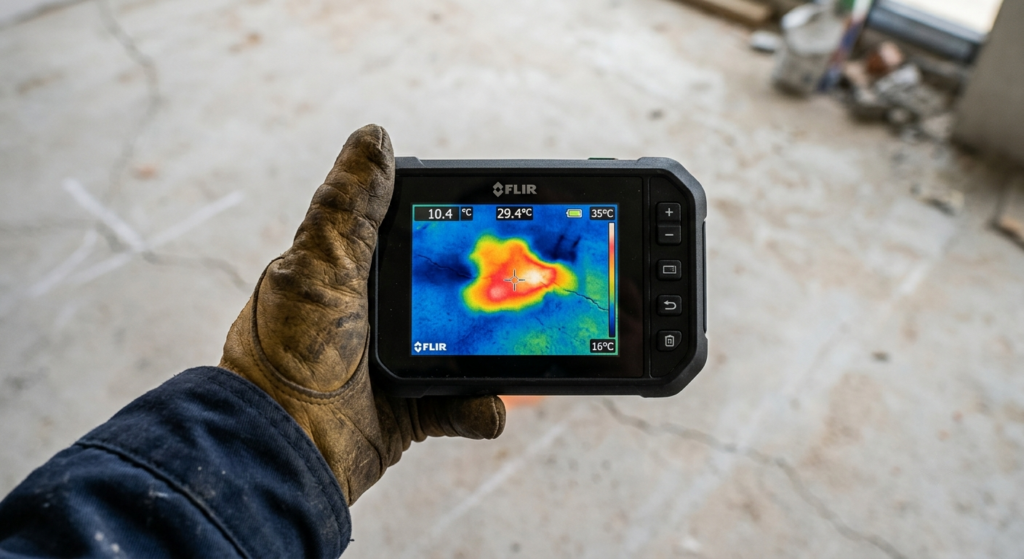
Once onsite, a plumber doesn’t start cutting concrete on a hunch. They narrow the leak’s position using a sequence of non-invasive tools, each ruling out or confirming a section of pipe.
Water meter and pressure testing
The first step confirms there is genuinely a leak in the pipework (rather than, say, a toilet cistern fault). The plumber isolates the property’s water supply and watches the meter. If it keeps moving with everything turned off, water is escaping somewhere in the system.
Acoustic listening devices
Sensitive listening equipment is placed at intervals along the suspected pipe run. Escaping water under pressure creates a distinct sound signature that’s louder closer to the leak, allowing the technician to triangulate its approximate position.
Thermal imaging
A thermal camera reads surface temperature differences in the floor. Because leaking water (particularly from a hot water line) changes the slab’s surface temperature, this method can visually confirm what the acoustic test suggested.
Trace gas detection
For stubborn or very quiet leaks, a safe, non-toxic tracer gas is introduced into the pipe. As it escapes through the leak and rises through the slab, a detector on the surface picks up its exact exit point; often the most precise method available.
Repair Options Compared: Accessible-Pipe Repair, Slab Access or Rerouting
Once the leak is located, the next decision is how to physically reach and fix it. This depends on where the pipe runs, how deep it sits, and how much of the slab would need to be disturbed.
| Repair Approach | What It Involves | Best Suited To | Disruption Level |
| Accessible-pipe repair | Repairing the pipe where it’s already exposed (e.g., under a vanity or in a wall cavity near the slab edge) | Leaks near existing access points | Low |
| Slab access (spot repair) | Cutting a small, targeted section of concrete directly above the confirmed leak point | Precisely located leaks in a single area | Moderate |
| Pipe rerouting | Running a new pipe above-slab or through an alternative path, bypassing the damaged section entirely | Older or deteriorating pipework, or leaks in hard-to-reach slab sections | Low to moderate (no major concrete work) |
What Determines Whether Concrete Cutting or Excavation Is Necessary
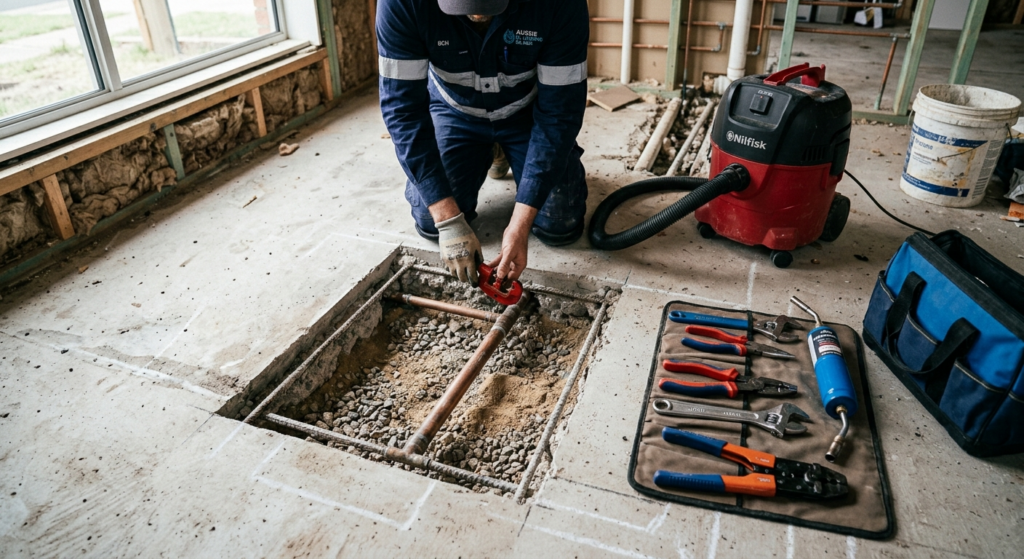
Not every slab leak requires breaking concrete. A plumber weighs several factors before recommending this step:
- Precision of the detected location — The more accurately the leak is pinpointed, the smaller the cut required.
- Depth and type of slab construction — Some slabs have shallower pipe runs that are easier to access.
- Condition of the surrounding pipework — If nearby sections show similar wear, rerouting may be more cost-effective long term than repeated spot repairs.
- Property type — A residential bathroom slab and a warehouse floor under commercial plumbing services present very different access and compliance considerations.
- Finished flooring above — Tiled or polished concrete floors influence how a repair is planned to minimise cosmetic damage.
Repair vs Replacement: A Decision Table
For older homes or properties with recurring leaks, a plumber will often assess whether a one-off repair makes sense or whether rerouting/replacing a section of pipe is the better long-term investment.
| Factor | Repair Is Usually Sufficient | Replacement/Reroute Is Usually Recommended |
| Age of pipework | Recent installation, isolated fault | Pipes over 20–25 years old, especially galvanised steel |
| Leak history | First reported leak | Second or third leak in the same section |
| Pipe material | Copper or modern PVC in good condition | Corroded or degraded materials |
| Access difficulty | Leak sits near an accessible edge | Leak sits deep under a load-bearing section |
What Happens After the Leak Is Found: Restoring the Affected Area
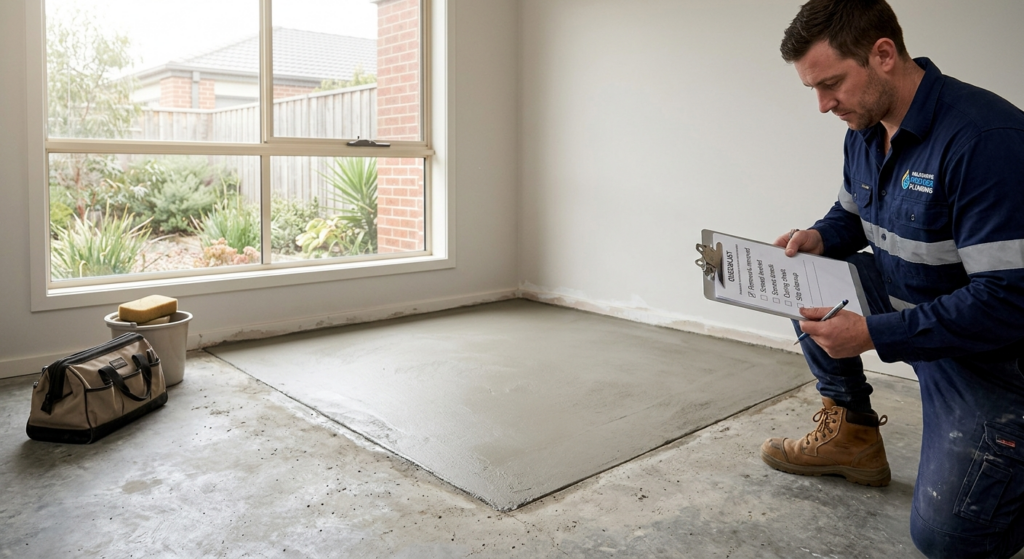
Once the repair or reroute is complete, the final stage is reinstating the slab and surrounding finishes, backfilling and re-pouring any cut concrete, then handing back flooring, tiling or carpet reinstatement to the relevant trade if needed. A reputable plumber will also pressure-test the repaired section before closing it up, confirming the fix holds before anything is covered again.
If the underlying cause was general pipe age rather than a one-off accident, this is also the right moment to discuss ongoing plumbing maintenance to reduce the risk of future leaks, particularly for older Melbourne properties where ageing pipework is common.
It’s also worth noting that slab leaks are sometimes discovered alongside unrelated issues such as blocked drains Melbourne properties experience with ageing stormwater or sewer lines, or, in rarer cases, a concurrent gas leak Melbourne emergency where gas and water lines run close together; both of which should be flagged to your plumber during the initial inspection.
Frequently Asked Questions
The clearest signs are a moving water meter with all taps off, a warm or damp patch on the floor with no external cause, and the sound of running water when nothing is in use. A plumber confirms this with a water meter test before any further investigation.
Detection itself is non-invasive; hence, acoustic, thermal, and trace gas methods don’t require cutting concrete. Disruption only occurs during the repair stage, and even then it’s usually limited to a small, targeted area once the leak is precisely located.
Detection typically takes one to two hours. Repair time depends on the chosen method; an accessible-pipe repair can be same-day, while a slab access repair involving concrete cutting and curing may take one to a few days.
Only the section directly above the repair is usually affected. Tiled or timber flooring in that specific area may need reinstatement, but the rest of the floor is typically untouched.
Costs vary depending on property size, pipe accessibility, and which detection method is required. A straightforward assessment with acoustic and thermal tools is generally more affordable than cases requiring trace gas detection across a large area. Ask for a clear quote before work begins.
Yes. Prolonged water loss under a slab can soften surrounding soil, potentially leading to cracking in the slab or nearby walls. This is why early investigation matters, even if the leak seems minor.
Yes. Any work on water supply pipework must be carried out by a licensed plumber. Before hiring anyone for slab leak repairs, you can verify a practitioner’s current registration using the Victorian Building Authority’s public register.
Think You Have a Slab Leak? Get It Properly Diagnosed First
A suspected leak under a concrete slab doesn’t always mean major excavation. But the only way to know is a proper diagnostic process, not guesswork. If you’re seeing any of the warning signs above, MKS Plumbing can assess the situation with the right detection equipment and walk you through the options clearly before any work begins. Reach out for an obligation-free chat about what you’re noticing, and the team of experts will help you understand the next step.