


Why Blocked Drains in Melbourne Demand Immediate Attention
What Melbourne homeowners encounter can range from a slow kitchen sink to a full sewer backup that floods a bathroom overnight. Acting fast matters enormously. A minor blockage that costs very little to clear can become a collapsed pipe repair costing thousands when left unaddressed. Moreover, standing water creates health hazards. It breeds bacteria, attracts pests, and damages flooring, cabinetry, and structural timbers rapidly.
Melbourne’s ageing inner-city pipe infrastructure, clay sewer mains, and dense tree canopy make blocked drains a frequent reality for homeowners across the metro area. Additionally, seasonal conditions play a role. Heavy autumn rainfall overwhelms stormwater drains. Summer root growth accelerates root intrusion into sewer lines. Understanding these local dynamics helps Melbourne residents act smarter and faster.
At MKS Plumbing, our licensed team responds 24 hours a day, 7 days a week. We bring professional-grade equipment to every job. Consequently, we resolve most blocked drain emergencies on the first visit.
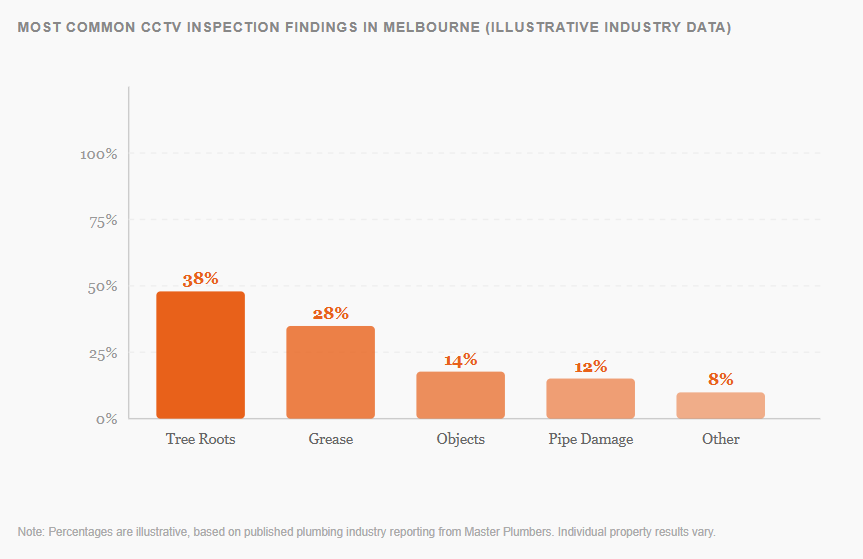
According to Melbourne water authorities, residential plumbing blockages account for a significant proportion of emergency service calls annually. Tree root intrusion and grease buildup are consistently the leading causes in urban areas.
Common Causes of Blocked Drains in Melbourne Homes
Understanding what causes drain blockages helps Melbourne homeowners prevent the most expensive repairs. Furthermore, knowing the cause helps a plumber arrive prepared with the right tools. The six most common culprits across Melbourne properties include:
Tree Root Intrusion
Roots seek moisture aggressively. They enter tiny pipe joints. Over time, they expand and crack terracotta or concrete mains. This is the single most common cause in Melbourne’s inner suburbs.
Grease and Fat Buildup
Kitchen fats solidify inside drain walls. Repeated cycles of hot grease cooling inside pipes create thick, hard deposits that gradually reduce flow and eventually block it entirely.
Hair and Soap Scum
Bathroom drains accumulate hair and soap residue quickly. Combined, they form a dense mat that catches other debris and restricts water flow progressively over weeks.
Foreign Objects
Wet wipes, cotton pads, nappies, and children’s toys enter drains accidentally. Unlike toilet paper, these items do not break down. They create immediate and stubborn blockages.
Collapsed or Broken Pipes
Ground movement, heavy vehicle traffic, and ageing materials cause pipes to crack or collapse. Debris then collects at the break point. Only CCTV inspection reveals this accurately.
Stormwater Overload
Melbourne’s heavy rainfall events overwhelm stormwater drains. Leaf litter, silt, and debris enter and accumulate rapidly. Resulting backup can flood gardens, driveways, and basements.
Notably, many Melbourne homes built before 1980 still use terracotta or cast iron drains. These materials are far more vulnerable to cracking, root intrusion, and corrosion than modern PVC systems. Therefore, older properties benefit greatly from periodic professional inspection.
Learn more about our blocked drain repair service and how we diagnose the exact cause before any work begins.
Warning Signs You Should Never Ignore
Catching a blockage early saves Melbourne homeowners considerable money and stress. Fortunately, drains rarely block without warning. Instead, they send clear signals well before a full backup occurs. Recognising these signs early is therefore critical.
Physical Warning Indicators
- Water drains noticeably more slowly than normal in sinks, showers, or baths
- Gurgling or bubbling sounds come from drains after water flows through them
- Water backs up into a shower when you flush the toilet nearby
- Multiple fixtures drain slowly simultaneously across the property
- Wet or sunken patches appear in the lawn without rain or irrigation
- Water stains or damp marks develop on ceilings or internal walls
Odour and Structural Indicators
- A persistent rotten egg or sewage smell comes from drains or yard areas
- Unusually lush or fast-growing grass patches appear above sewer lines
- Insects, particularly drain flies or cockroaches, increase noticeably indoors
- Visible cracks develop in driveway concrete or paving near drain locations
The Master Plumbers advises that homeowners who address drain slow-downs immediately spend on average significantly less than those who wait until a full blockage or pipe failure occurs.
When two or more of these signs appear together, the blockage is likely in a shared sewer or main drain. In that situation, only a professional CCTV drain inspection can locate and identify the cause with certainty.
When DIY Drain Cleaning Reaches Its Limit
Australian homeowners often try simple remedies first. That approach is entirely reasonable for very minor blockages. However, most serious drain problems require professional tools and licensed expertise.
What DIY Can Reasonably Handle
A plunger clears light surface blockages in bathroom basins effectively. Similarly, a drain snake purchased from a hardware store can remove visible hair clogs close to the drain opening. Additionally, pouring hot water with dish soap down a kitchen drain occasionally shifts early-stage grease deposits.
What DIY Cannot Safely Handle
Root intrusion requires mechanical cutting equipment or hydro-jetting. Collapsed pipes need diagnosis via camera first. Chemical drain cleaners sold commercially are highly caustic. They damage older pipes, harm septic systems, and pose genuine safety risks to skin and eyes. Furthermore, they rarely clear solid obstructions completely. They simply create a temporary gap that reblocks quickly.
DIY Approach
- Suitable for surface hair or soap
- Plunger works on light clogs
- Hot water shifts early grease
- Risk of pipe damage with chemicals
- Cannot diagnose root cause
- May push blockage deeper
Professional Plumber
- Clears all blockage types
- CCTV identifies exact cause
- High-pressure jetter removes roots
- No pipe damage risk
- Compliance-grade reporting
- Prevents recurrence long-term
Most importantly, unlicensed plumbing work on sewer lines is illegal in Victoria under the Victorian Building Authority regulations. Only a licensed plumber may carry out drain repairs beyond basic household maintenance. Attempting it without a licence risks fines, insurance voidance, and serious structural damage.
CCTV Drain Inspection and What It Reveals
CCTV drain inspection is the most accurate diagnostic tool available in modern plumbing. A waterproof camera travels through the drain on a flexible cable. It transmits live footage directly to a monitor. Consequently, the plumber sees exactly what is inside the pipe without excavation.
What the Camera Identifies
- Root intrusion at pipe joints and cracked sections
- Grease or scale deposits narrowing the pipe bore
- Pipe collapse, offset joints, or bellied sections holding water
- Foreign objects lodged inside the drain
- Corrosion or deterioration in older metal pipes
- Precise location of blockages for targeted repair
Following a CCTV inspection, MKS Plumbing provides a full drain report with footage, still images, and written findings. This report is valuable for property buyers, landlords, strata managers, and building inspectors. Moreover, it provides documented evidence for insurance claims when pipe damage is involved.
Additionally, CCTV inspection is strongly recommended before purchasing any Melbourne property. It removes uncertainty about hidden drain condition. Furthermore, it gives buyers negotiating power when defects are found prior to settlement.
Leak Detection and Water Leak Detection in Melbourne
Water leaks cost Melbourne homeowners significantly more than the repair itself. Undetected leaks waste thousands of litres of water annually. They damage floors, walls, and foundations silently over months. Consequently, professional leak detection and water leak detection services are among the most valuable in residential plumbing.
How Modern Leak Detection Works
Modern leak detection uses acoustic listening devices, thermal imaging cameras, and pressure testing to locate leaks without demolition. These methods pinpoint leaks hidden inside walls, under concrete slabs, and beneath landscaping. Notably, the process is non-invasive. No tiles or walls are damaged simply to locate the source.
Signs of a Hidden Water Leak
- Unexplained spikes in your Melbourne water utility bill
- Damp or discoloured patches on walls, ceilings, or floors
- Mould or mildew growth without obvious moisture cause
- Sound of running water when all taps and appliances are off
- Water metre moving when no fixtures are in use
- Soft or spongy flooring in areas near pipes
According to Victorian water retailers like Greater Western Water, a continuously running toilet can waste between 60,000 and 96,000 litres of water every single year. Furthermore, even minor dripping taps can waste thousands of litres annually. Catching these problems early is both an environmentally and financially responsible move for every household.
MKS Plumbing’s licensed technicians carry acoustic leak detectors and thermal imaging cameras to every leak detection job. We locate the problem first, then repair it precisely. This approach avoids unnecessary damage to your Melbourne property.
Burst Pipes, Gas Leaks and Roof Leaks: Emergency Plumbing Explained
Some plumbing emergencies cannot wait. Burst pipes flood properties within minutes. Gas leaks create immediate explosion and carbon monoxide risks. Roof leaks following storms damage insulation, ceilings, and electrical wiring rapidly. In each scenario, calling a licensed plumber immediately is the only appropriate response.
Burst Pipes
Burst pipes are a common emergency across Melbourne properties, primarily caused by unregulated water pressure spikes, soil movement, and deteriorating old materials. Older copper or galvanised steel pipes are particularly vulnerable to corrosion over time. Additionally, tree root pressure and severe water hammer vibrations can cause sudden joints to snap. The first step after noticing a burst is always to locate your water meter—usually found near the front boundary line—and shut off the mains supply immediately to prevent structural flooding.
Gas Leaks
A gas leak demands immediate evacuation of the property. Do not switch any lights or appliances on or off. Do not use a mobile phone inside the building. Open windows as you leave and call your gas supplier plus emergency services. Once safe, contact MKS Plumbing for licensed gas leak detection and repair. Only a licensed gasfitter may legally repair gas lines in Victoria.
Roof Leaks
Roof leaks in Melbourne most commonly originate from cracked flashing, broken or displaced roof tiles, and deteriorated waterproof membranes around skylights or penetrations. After heavy rain, water finds even pinhole-sized entry points. Our team provides roof leak repair and roof condition reports for Melbourne homes and commercial buildings.
Hot Water Service Issues Linked to Plumbing Neglect
Blocked drains and plumbing maintenance neglect often contribute directly to hot water system problems. Sediment buildup in pipework reduces hot water flow. Scale deposits inside hot water tanks lower heating efficiency. Furthermore, pressure and temperature relief valves that are never tested can fail silently, creating a safety hazard.
Melbourne homeowners should arrange an annual hot water service inspection to check the anode rod condition, thermostat calibration, and cold water connections. Additionally, homeowners should manually test their pressure and temperature relief (PTR) valves every six months. Regular servicing ensures a system lasts significantly longer and operates at peak efficiency.
Signs Your Hot Water System Needs Attention
- Rusty or discoloured water from hot taps only
- Inconsistent hot water temperature across fixtures
- Rumbling or popping sounds from the tank during heating
- Visible rust stains or moisture around the base of the unit
- Hot water running out faster than usual during normal use
Commercial and Industrial Plumbing Needs Across Melbourne
Commercial and industrial plumbing demands operate on a completely different scale from residential work. A blocked drain in a Melbourne restaurant kitchen can force a compliance closure. A burst main in an office building floods server rooms and archives. Consequently, businesses across Melbourne rely on plumbers with commercial-grade capability and rapid response times.
Commercial Plumbing Services
MKS Plumbing’s commercial plumbing services cover retail centres, hospitality venues, strata complexes, medical facilities, schools, and government buildings across Melbourne. Our team holds the necessary licences for large-scale sewer and stormwater works, grease trap installation and maintenance, fire service repairs, and complex leak detection across multi-level buildings.
Grease Traps in Melbourne Hospitality
Grease traps are mandatory for most Melbourne food service businesses under local council regulations. Failing to maintain a grease trap causes sewer blockages, council fines, and health compliance issues. MKS Plumbing services grease traps across Melbourne’s hospitality sector with scheduled cleaning programmes that keep businesses compliant year-round.
Fire Service Repairs and Compliance
Fire suppression systems in commercial Melbourne buildings require licensed plumbing maintenance. Our team handles fire service repairs including sprinkler system maintenance, backflow preventer testing, and hydrant system inspection. All installation work meets AS 2118 requirements, while ongoing routine testing complies strictly with AS 1851 standards.
Industrial Plumbing
Industrial plumbing encompasses process pipework, chemical waste management, large-scale drainage systems, and specialised pressure testing. MKS Plumbing serves Melbourne’s manufacturing, warehousing, and logistics sectors with fully compliant industrial plumbing solutions.
Preventative Plumbing Maintenance for Melbourne Properties
Prevention is consistently cheaper than repair. Melbourne homeowners and property managers who invest in scheduled maintenance plumbing avoid the majority of emergency call-outs. Furthermore, well-maintained plumbing systems increase property value, satisfy tenancy regulations, and reduce insurance claim frequency.
Annual Plumbing Maintenance Checklist
- Inspect and clean all internal drain traps and accessible pipes
- Test all tap washers, shower heads, and toilet cistern components
- Check under-sink cabinet areas for moisture, drips, or pipe corrosion
- Test hot water T&P relief valve function and thermostat accuracy
- Clear stormwater drain grates of leaf litter and debris before winter
- Inspect roof gutters and downpipes for blockages and damage
- Check water metre for movement indicating hidden leak activity
- Arrange CCTV inspection every 3 to 5 years for properties over 20 years old
Rental property landlords in Victoria have additional obligations. The Residential Tenancies Act requires rental properties to be maintained in a condition suitable for habitation. Blocked drains and plumbing defects must be addressed within regulated timeframes. Our plumbing maintenance plans help Melbourne landlords meet these obligations efficiently.
Sewer and Stormwater Repairs
Melbourne’s sewer and stormwater networks handle millions of litres daily. When private connections to the main sewer deteriorate, blockages and overflows follow. MKS Plumbing carries out sewer and stormwater repairs across Melbourne using pipe relining, excavation, and no-dig repair methods. These solutions restore full drainage function without destroying landscaping unnecessarily.
Drain Reports and Roof Reports Explained
Formal inspection reports are increasingly required in Melbourne property transactions, strata disputes, insurance assessments, and council compliance submissions. Both drain reports and roof reports from a licensed plumber carry professional authority and serve as formal documentation of a property’s condition.
What a Drain Report Includes
- CCTV footage and annotated still images of all inspected drains
- Written description of findings at each inspection point
- Condition rating for each section of drain inspected
- Recommendations for repair, relining, or replacement
- Estimated service life of existing pipe infrastructure
- Plumber’s licence number and professional certification
What a Roof Report Includes
- Photographic documentation of all roof surfaces and penetrations
- Condition assessment of flashings, gutters, downpipes, and membranes
- Identification of active or potential leak entry points
- Recommendations for immediate repair versus planned maintenance
- Compliance notes relative to Australian building standards
Property buyers, conveyancers, strata managers, and building owners across Melbourne use these reports to make informed decisions. Obtaining a professional report before committing to a purchase or major renovation protects against costly surprises.
Frequently Asked Questions About Blocked Drains by people of Melbourne
The following questions reflect the most common concerns Melbourne homeowners raise about blocked drains, drain cleaning, and related plumbing issues. Answers are direct and factual.
A licensed Melbourne plumber uses a high-pressure water jetter or electric eel to clear severe blockages. DIY methods rarely succeed on serious obstructions. Call MKS Plumbing on 03 9399 1011 for same-day service across Melbourne.
Hot (not boiling) water combined with a small amount of dish soap can shift very minor grease buildup. Baking soda followed by white vinegar creates a mild fizzing action helpful for light debris. For anything more stubborn, contact a licensed Melbourne plumber.
Gurgling sounds from drains, sewage odours, water backing up into multiple fixtures simultaneously, wet patches in your yard, and slow drainage across the entire property all indicate a serious blockage in a main sewer line. These require professional attention immediately.
High-pressure water jetting is the most effective method. It removes blockages completely rather than simply punching a hole through them. For root intrusion, mechanical root cutting combined with jetting delivers the best result.
Salt is believed to break down grease deposits and suppress bacterial odours inside drain pipes. Its effectiveness is limited. It is not a substitute for professional cleaning but causes no drain damage in small quantities.
A professionally operated high-pressure water jetter is the most powerful and pipe-safe drain clearing tool available. Commercially sold chemical drain cleaners are far less effective and can damage older or plastic pipes.
Licensed plumbers use high-pressure water jetters, electric eels (drain snakes), and CCTV inspection cameras. These tools address the actual cause of a blockage without the risks associated with caustic chemical products.
Boiling water can soften grease in metal pipe systems. However, it warps and cracks PVC pipes, which are common in Melbourne homes. Use very hot but not boiling water for plastic drain systems to avoid pipe damage.
White vinegar combined with baking soda creates a mild fizzing reaction. This dislodges light buildup and neutralises organic odours. It is entirely safe for pipes but ineffective on solid blockages or root intrusions.
Residential properties benefit from a professional drain clean every 12 to 18 months. Commercial kitchens and high-use facilities require cleaning every 3 to 6 months to prevent grease trap overload and sewer compliance issues.
Yes. Tree root intrusion is the leading cause of sewer blockages in Melbourne’s inner and middle suburbs. Older terracotta pipe joints provide easy access points. CCTV drain inspection identifies root damage precisely and quickly.
Most Australian home insurance policies do not cover gradual blockage damage or general maintenance drain cleaning. Sudden and accidental water damage from burst pipes may be covered. Review your specific policy carefully and consult your insurer directly.
Most residential drain blockages are cleared within 30 to 90 minutes by an experienced Melbourne plumber using professional equipment. Complex root intrusions or pipe collapses requiring repair take longer and depend on the scope of work involved.
No. Repeated use of caustic chemical drain cleaners corrodes pipe linings, damages rubber seals, kills septic bacteria, and poses serious chemical burn risks. Professional jetting is far safer and more effective for regular drain maintenance.
Conclusion: Act Fast on Blocked Drains in Melbourne
Blocked drains Melbourne homeowners and business owners encounter rarely resolve themselves. In fact, every hour of delay increases the risk of sewage overflow, pipe damage, and costly property repair. Furthermore, the underlying cause — whether roots, grease, foreign objects, or structural pipe failure — never disappears without professional intervention.
MKS Plumbing has served Melbourne with licensed, fully equipped plumbing services covering the full spectrum of residential, commercial, and industrial needs. Our team brings CCTV cameras, high-pressure jetters, acoustic leak detectors, and thermal imaging to every job. Consequently, we diagnose accurately and resolve problems permanently.
Whether you need an emergency blocked drain cleared at midnight, a professional leak detection service, a drain report for a Melbourne property purchase, or a scheduled plumbing maintenance programme for your investment property — MKS Plumbing is the licensed team Melbourne trusts.
Additionally, useful background reading on Australian plumbing systems, drain infrastructure, and sewer technology is available through the Plumbing Wikipedia reference page, which provides a solid overview of system types and terminology.